
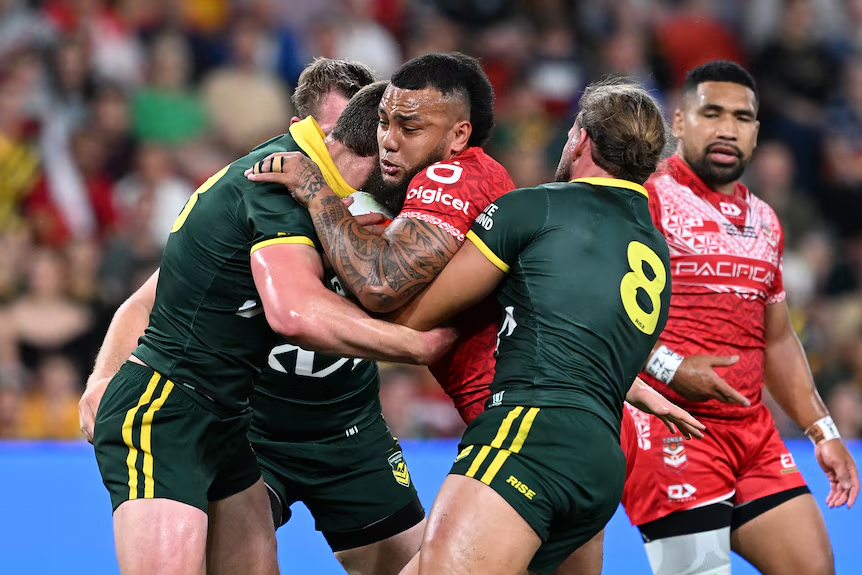
The NRL has overhauled State of Origin eligibility, now permitting New Zealand and England internationals to represent NSW or Queensland if they meet residency or heritage criteria.
Under the previous framework, players who had opted to represent the Kiwis or Lions at Test level were barred from the interstate series.
That restriction has been removed, so any player who lived in New South Wales or Queensland before turning 13, or whose father played for either state, can be selected.
Historically there was a distinction between tier-one and tier-two nations, with those representing Samoa or Tonga already able to play Origin without penalty.
The rule change clears the way for Addin Fonua-Blake to don the Blues despite his lone New Zealand Test appearance against Scotland in 2017.
If picked, Fonua-Blake could partner Payne Haas to form one of the most intimidating front rows Origin has seen this year.
The update also means Kalyn Ponga could switch his international allegiance to New Zealand without forfeiting Origin eligibility, while AJ Brimson and Victor Radley regain eligibility after representing England.
The change is likely to prompt selectors to rethink previous exclusions and will expand the pool of players available for selection.
It may also alter the balance of power across the series as more dual-qualified talents become available.
"Rugby league has changed, the international game has grown, and the rules need to reflect that," ARL Commission chair Peter V'landys said.
"If a player is eligible to play State of Origin, it makes no sense to exclude them simply because they've represented New Zealand or England at Test level.